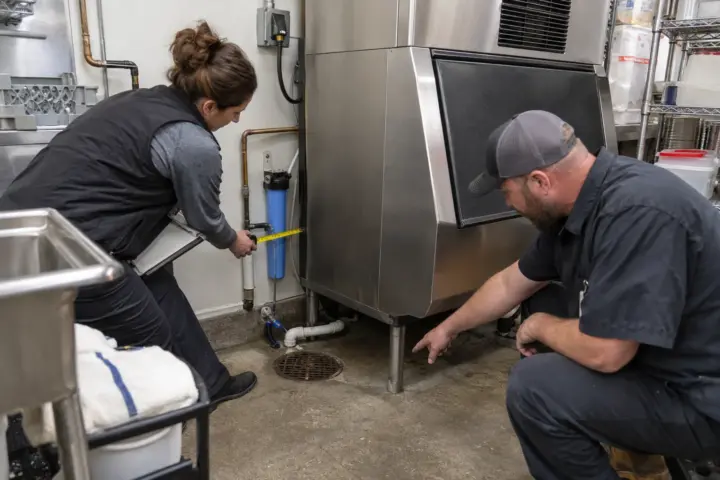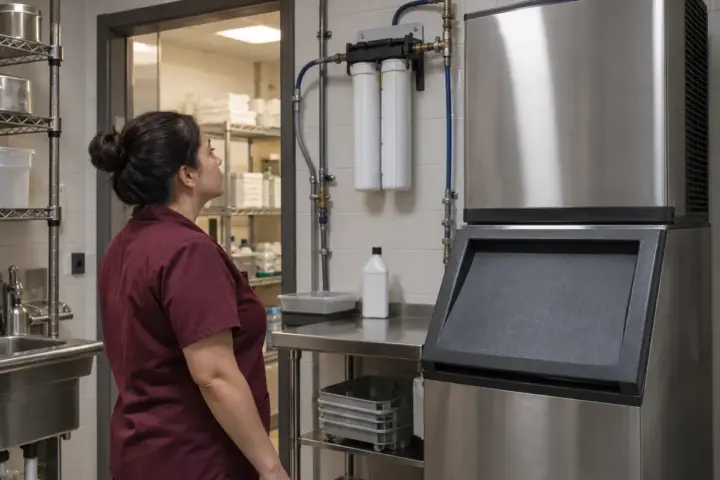
There is no responsible flat price for a commercial ice machine. Two systems with the same published daily production can have very different equipment, storage, condenser, installation and operating costs. The useful question is not simply, “What does the machine cost?” It is, “What will it cost to deliver the required ice reliably at this site?”
A good budget separates the ice-making equipment from the work required to put it into operation. Freezer Supply’s commercial ice machine cost FAQ provides a pricing overview. The ten factors below explain what moves a real project up or down.
1. Production capacity under real conditions
Higher-capacity equipment generally costs more, but the catalog production number needs context. Air and incoming-water temperature affect actual output. A machine selected with no operating margin may be cheaper to buy and expensive to live with if the facility repeatedly purchases emergency bagged ice.
2. Ice type and machine technology
Cube, nugget and flake machines use different evaporator and harvesting designs. Specialty ice form, dispensing and high-volume process requirements affect equipment cost and maintenance. Select the form around the application before comparing price. The Freezer Supply cube-versus-flake guide is one useful comparison.
3. Storage bin or dispenser
The ice head is only part of a modular system. Bin capacity, sanitary design, access height, adapters, cart systems and dispensers can materially change the package price. A correctly sized bin may reduce the production capacity needed for a short peak, while an oversized bin can create reach and ice-rotation problems.
4. Condenser configuration
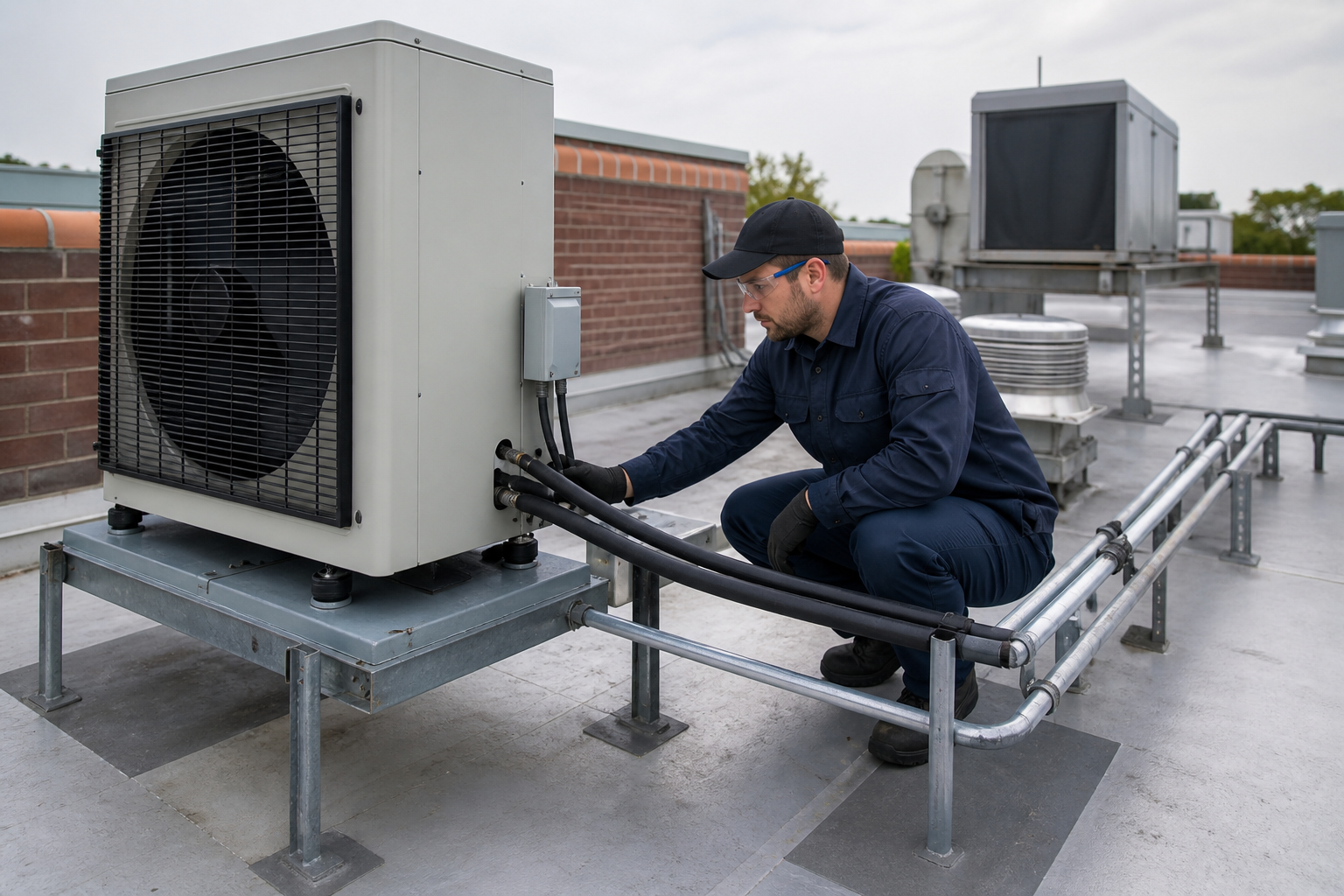
Self-contained air-cooled machines are common and relatively straightforward, but they reject heat into the room. Water-cooled equipment and remote condensers can solve specific heat, noise or space problems. They also change utility use and installation scope.
5. Electrical work
A replacement is not automatically compatible with the existing circuit. Voltage, phase, breaker, conductor, disconnect and receptacle requirements must match the exact model. Larger systems and remote condensers may need additional circuits.
6. Water supply and filtration
Budget for the shutoff, backflow protection, piping, pressure correction and filtration appropriate to the water analysis. Filtration is not a one-time cost: cartridges and scale-control media have replacement schedules. Ignoring water quality can shift cost from installation to cleaning, lost production and premature component failure.
7. Drainage
Drain work can be minor when an approved receptor is correctly located. It can become a substantial project when the run lacks slope, an air gap is missing or the finished room has no suitable receptor. Condensate pumps should not be treated as a universal substitute for proper gravity drainage.
8. Delivery, rigging and site access
Loading access, door widths, stairs, elevators, curbs and rooftop work affect labor and equipment. Include removal and lawful disposal of the old machine when applicable. A low equipment quote that excludes delivery and set-in-place work is not comparable to a complete installed proposal.
9. Ventilation and room heat
An air-cooled machine can add a meaningful heat load to a small room. If the HVAC system or exhaust must be modified, that work belongs in the ice-machine budget. Restricted airflow can also reduce production, so saving space by crowding the machine can create ongoing cost.
10. Maintenance, cleaning and downtime strategy
Total ownership includes water treatment, filters, sanitation, deliming, condenser cleaning, preventive service, repair access and lost production during downtime. Facilities that cannot operate without ice should price redundancy or a documented contingency. Compare warranty coverage carefully, but do not assume every labor, travel or maintenance item is included. Freezer Supply maintains a current warranty comparison for this review.
How to compare quotes fairly
Ask each proposal to identify the ice head, bin or dispenser, accessories, condenser arrangement, delivery, installation, utility work, permits, startup and exclusions. Confirm production at the expected air and water conditions. A responsible comparison uses the same scope and operating target across bidders.
The Freezer Supply pricing request is most useful when it includes daily demand, peak period, required ice form, available utilities, space measurements and project location.
Frequently asked questions
Is installation included in a commercial ice machine price?
It depends on the proposal. Some prices cover equipment only, while others include delivery, set-in-place work and selected utility connections. Confirm every included and excluded item in writing.
Does buying a larger machine always reduce long-term cost?
No. Appropriate margin is valuable, but unnecessary capacity can increase equipment, electrical, ventilation and cleaning costs. Size around documented demand and realistic operating conditions.
Which costs are most often missed?
Drain corrections, filtration, electrical changes, heat rejection, rigging, old-equipment removal and after-installation filter and sanitation costs are frequent omissions.
Should buyers compare purchase price or total ownership cost?
Both. Purchase price protects the project budget; total ownership cost tests whether the system will remain practical after water treatment, energy, cleaning, service and downtime are considered.