
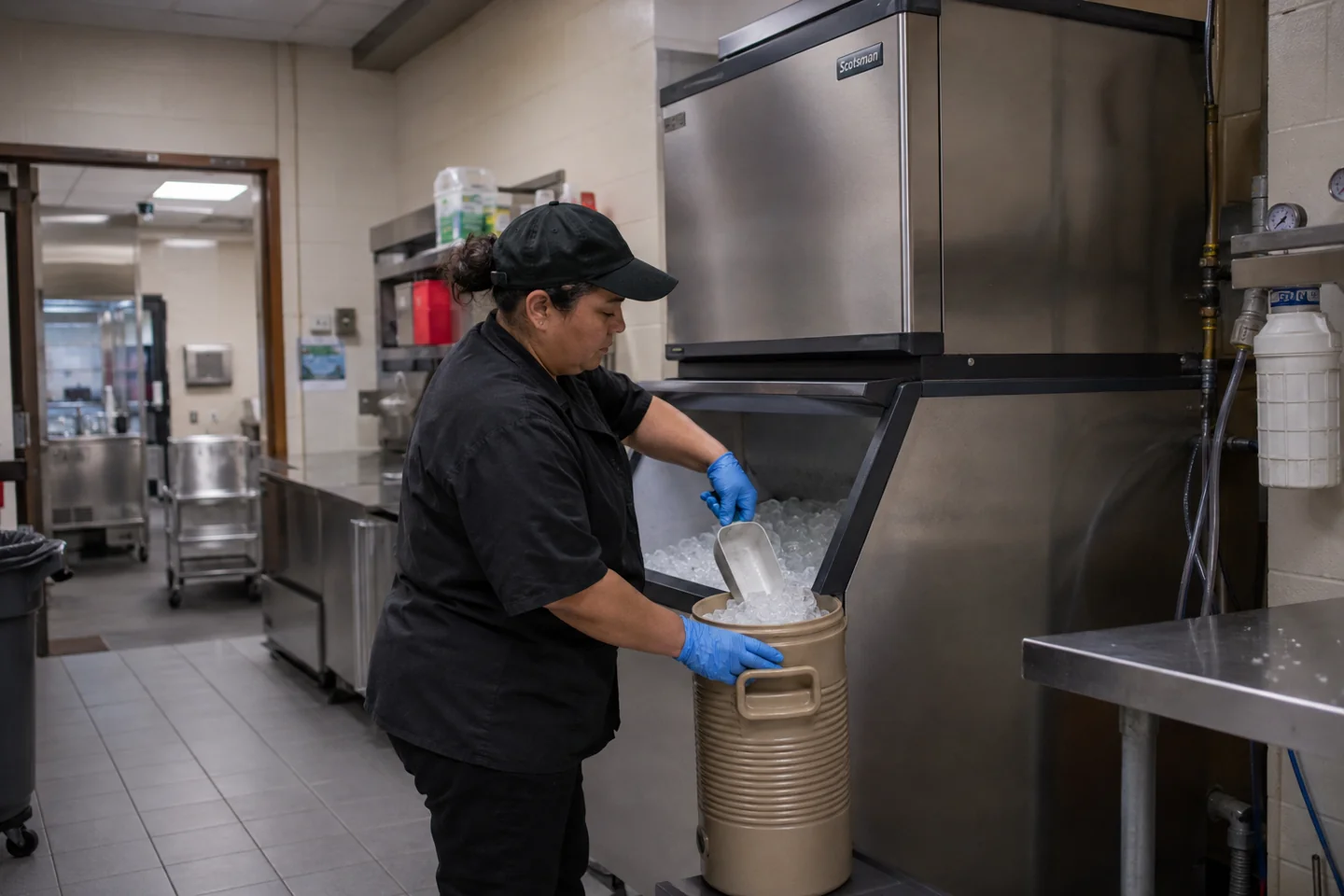
Bloomington, Illinois, restaurants adding outdoor service should revisit their ice supply before the extra seating opens. More beverage orders can expose limits in storage, replenishment and staff access even when the machine still operates normally. Compare ice equipment around the expanded service pattern rather than assuming another season can be supported by the original indoor calculation.
Connect Bloomington seating plans with the equipment brief
The city maintains outdoor dining and bar operation resources, including the current approval process. Use the approved operating arrangement when counting service points and planning staff movements. Do not base a purchase on additional seating that has not been confirmed for the premises.
Separate normal indoor sales from the additional outdoor draw. Include bar-well filling before service and subsequent replenishment. If service periods overlap, evaluate the combined demand rather than treating the two areas as independent loads that occur at different times.
Use the restaurant demand answer with your own beverage mix. A broad seat-based estimate is useful for an initial discussion, but cup sizes, refill practices and preparation uses should refine the provider's recommendation.
Check the replenishment route as carefully as production
A hypothetical Bloomington operator could add patio tables without adding a second bar. The indoor station would then serve more customers, and staff might make more frequent trips to a remote bin. The purchasing decision should identify whether the bottleneck is production, accessible reserve or the way stations are supplied.
The storage planning answer explains the reserve question. Ask providers to compare workable layouts through the commercial system guide. A second production point may shorten carrying distances, but it also creates additional utilities, cleaning and maintenance responsibilities.
Compare seasonal use with year-round ownership cost
Document how the system will be used when outdoor service is unavailable. Larger equipment should have a reasoned capacity allowance, not merely an assumption that more output always represents better value. Ask about the cost of operating and maintaining the chosen arrangement across the actual business calendar.
Review leasing and purchase considerations before comparing monthly payments with an equipment purchase. Confirm the agreement term, included service and responsibilities during quieter periods. A low payment is not the same thing as a low total commitment.
Have an installer assess clearances and operating conditions around the proposed machine. Include treatment, drainage, electrical work and access to filters and panels. Outdoor customer seating does not mean the ice machine itself is suitable for an outdoor location.
Request complete Bloomington ice machine proposals
Specify the exact machine, compatible bin or dispenser, accessories, delivery and commissioning. Ask bidders to identify exclusions, warranty terms and the company providing local service. Plan any changeover around trading so the old supply is not disconnected before the replacement and required work are ready.
Use the Illinois ice equipment directory for a broader purchasing program. Compare Bloomington ice machine prices with the seating plan and demand record attached. Providers can then price the actual seasonal and indoor operation, making it easier to choose a system that improves service without hiding extra work or unnecessary capacity in the proposal.


