
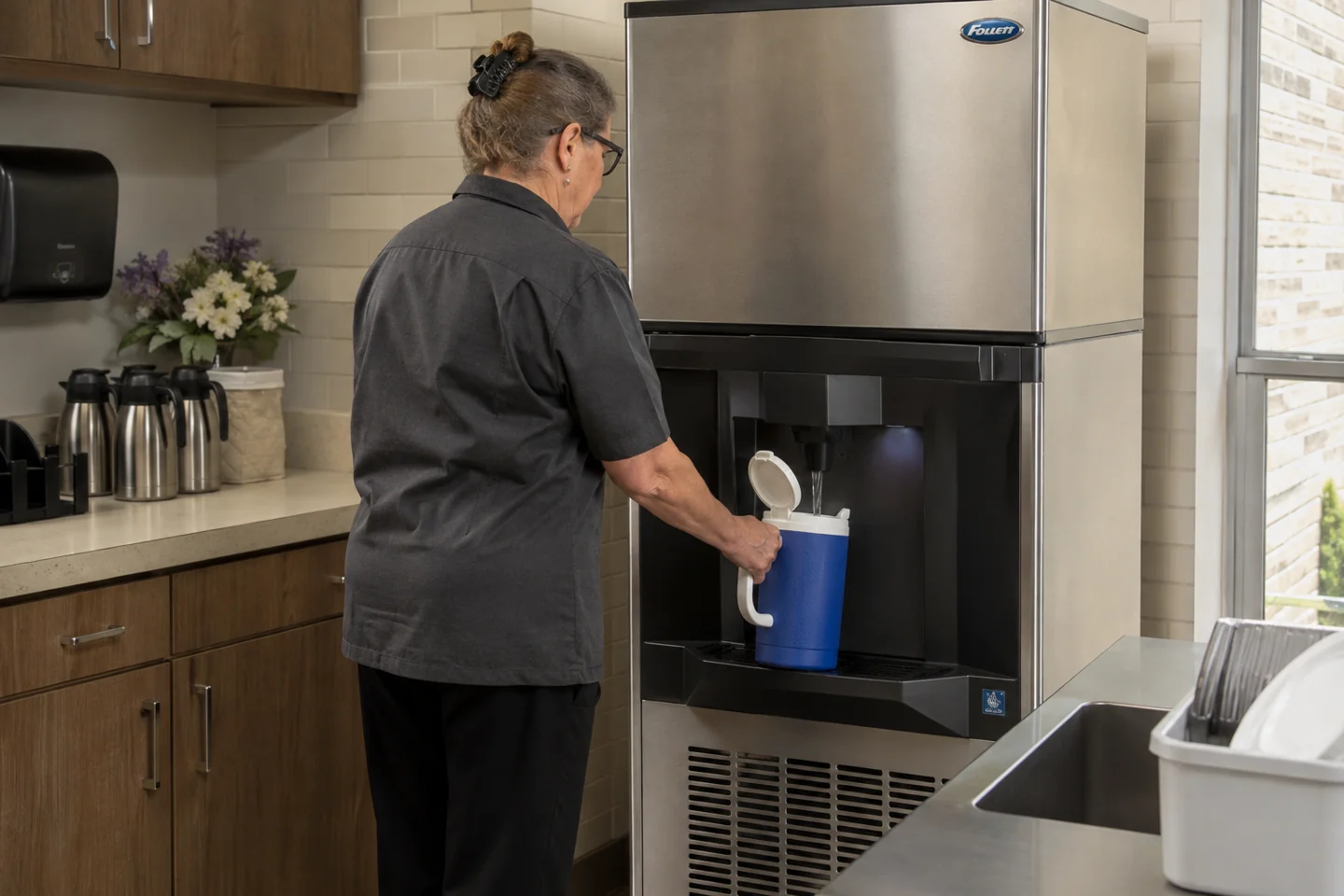
Greenville, North Carolina, businesses introducing a new beverage service should measure the additional ice requirement before replacing equipment. A change in drink size, service hours or takeout volume can matter more than another table in the dining room. Compare commercial machines using the revised menu and busiest interval, then price the storage and installation needed to support that change.
Define the Greenville expansion precisely
List what changes: new cold drinks, a second service counter, longer opening hours or an additional catering operation. Keep the existing demand visible so suppliers can see whether the new work overlaps with a current rush. Do not describe every change simply as business growth.
The city's business development resources provide a local starting point for an expanding operation. Establish any premises or operating approvals with the relevant departments before fixing the equipment layout. An early business plan and the final approved service arrangement may not be identical.
Use the ice capacity guide to convert the operating change into a supplier brief. Ask bidders to identify their assumptions so forecast growth does not become an unexplained allowance for excessive equipment.
Examine the busiest transaction mix
A hypothetical Greenville cafe moving from mostly hot drinks to a larger cold-drink menu could increase ice consumption without increasing customer numbers. Record the expected product mix and cup sizes, then compare those figures with observed use after opening. A recommendation based only on customer count could miss the change entirely.
Review the cube and nugget comparison when choosing ice for the drinks. Confirm compatibility with the proposed dispenser and preparation method. A particular texture may suit a menu, but the full system still needs adequate reserve and recovery.
The storage sizing answer helps separate immediately available ice from production over the working day. Include the ice taken to fill stations before the first customer order.
Fit the installation around the actual counter
Compare the space needed for production, storage and staff access. An undercounter installation may support a compact station, while a separate machine and bin may provide a different reserve. Use the commercial equipment overview to discuss both arrangements without assuming one configuration always offers better value.
Have qualified contractors check water, drainage, electrical supply and service clearances. Include filtration and room conditions in the specification. Ensure neighboring equipment and stored supplies will not obstruct access after the work is complete.
Ask staff to record the opening reserve and any shortages during the first representative service cycles, then compare the results with the accepted specification.
Compare Greenville equipment and transition costs
Request the exact machine, compatible storage, adapters, treatment, delivery and commissioning. Identify work outside the equipment supplier's contract and agree when existing production must stop. Keep a practical interruption plan available if the new service launches before every installation issue is resolved.
Review purchase and lease commitments alongside maintenance responsibilities. Request Greenville ice machine prices with the revised menu and operating schedule attached. Comparable proposals should explain how the equipment supports the changed transaction mix, what remains to be installed and who services the system after the initial expansion work is finished.


