
Lancaster, Ohio, ice machine buyers adapting an existing business space should settle equipment access and building work before committing to a model. An installation can look simple until the delivery route, drainage or exterior alterations are examined. Compare commercial ice systems using the real premises constraints, then balance usable production with the cost of making the equipment fit.
Start with the Lancaster building, not a catalog photograph
The city's historic properties and districts information identifies its design-review district and exterior-review requirements. For an affected property, discuss proposed outside work with the appropriate officials before accepting an installation design. This is particularly relevant when a proposal includes equipment or connections outside the existing interior space.
Do not assume that moving a condenser outdoors is a routine alternative everywhere. Ask the contractor to identify its location, access needs and connection route. The remote condenser guide explains the equipment tradeoffs; property-specific approvals and installation details still need their own review.
Measure entrances, stairs, turns and the clearance needed to assemble the machine and storage components. Agree how old equipment will be removed. The usable installation space is only one part of the physical access question.
Preserve the service routine while improving capacity
Record where staff collect ice and how frequently they replenish beverage stations. A replacement placed farther away may provide more production while increasing carrying work. Discuss any layout change with the people who run the busiest shift before approving the final position.
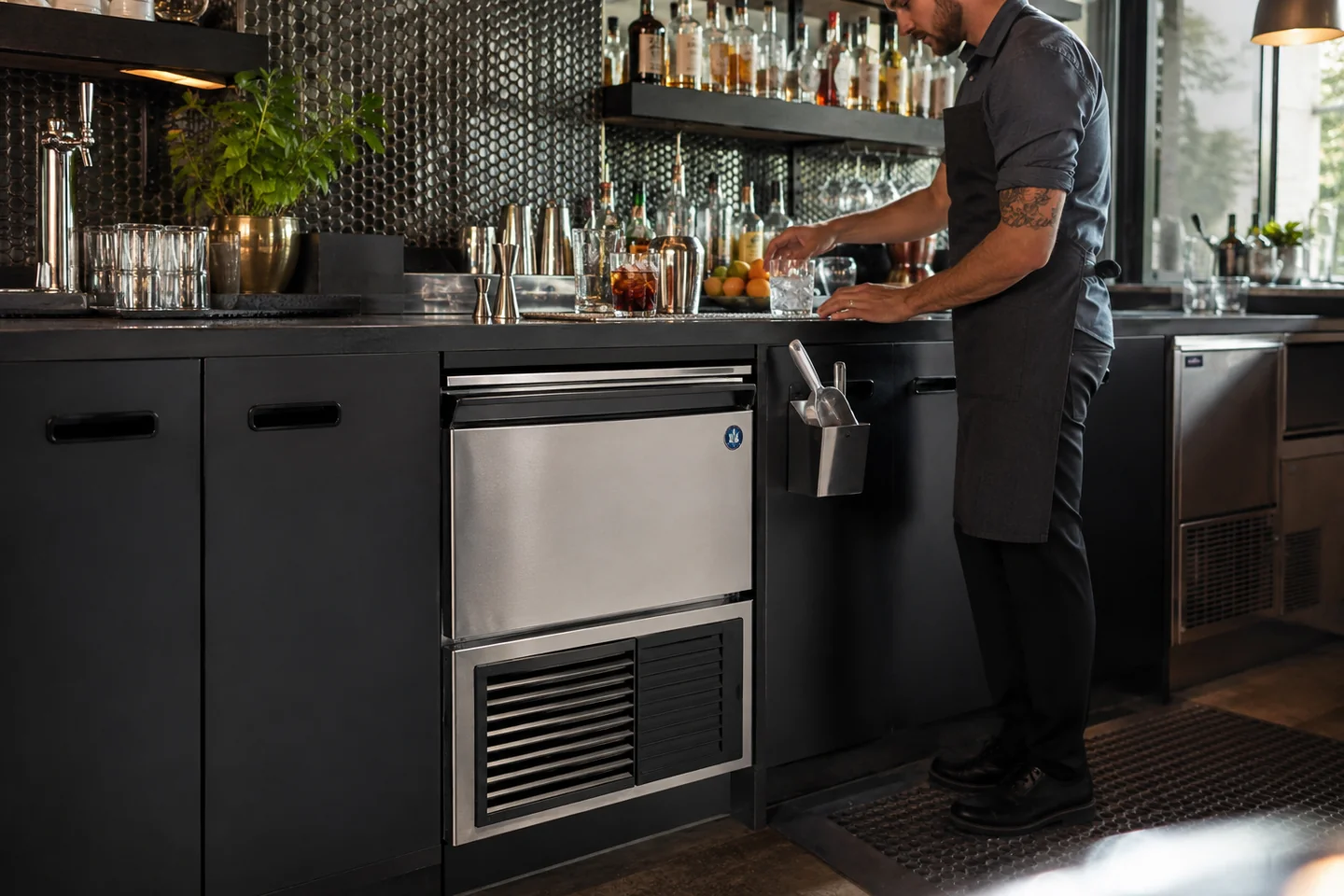
For illustration, a compact Lancaster restaurant could compare a smaller undercounter unit near service with a modular arrangement in another room. The evaluation should include reserve, recovery, staff movements and cleaning access—not an assumption that either configuration is inherently superior. Our commercial ice machine overview provides the starting distinctions.
Calculate what the replacement actually needs to supply
Use recent beverage volumes, glass sizes and preparation withdrawals to define demand. Identify a planned expansion separately from existing trade. Ask providers to state the conditions behind their production recommendation and how the proposed storage supports the heaviest interval.
The restaurant sizing answer and bin planning guide work together here. A bigger production head does not necessarily solve an insufficient opening reserve, while a larger bin cannot compensate indefinitely for inadequate production.
Have utilities and treatment assessed against the exact equipment specification. Include the filter assembly's position, maintenance access and replacement expense. Avoid copying an old machine's connection assumptions into a new purchase without checking them.
Keep the approved drawings with the final equipment order.
Request a Lancaster price that includes the transition
Ask for equipment, compatible storage, delivery, removal, site work and commissioning in writing. Confirm when the business must stop using its old supply and what temporary arrangements are needed. Identify the service provider and retain the current model-specific warranty terms.
Coordinate other properties through the Ohio ice machine directory, then request Lancaster ice machine quotes using one agreed brief. The right comparison exposes building work and operational disruption early, giving the business a practical installed cost instead of a machine-only price that grows after delivery.


