Commercial ice machine electrical requirements must come from the exact equipment configuration, not a rule of thumb. The ice-making head, condenser, dispenser, pump or accessory may each affect the work. Before ordering through a commercial ice machine price comparison, obtain current manufacturer data and have a qualified professional confirm the site conditions.
Identify every powered component
Write down the model numbers for the machine, bin or dispenser, condenser and accessories. Confirm voltage, phase, rated load, overcurrent protection and connection type from current documentation. A remote condenser or powered dispenser should not disappear from the electrical scope simply because the supplier’s headline price focuses on the ice maker. See current ice machine prices.
The commercial ice machine catalog helps buyers distinguish equipment families, while the buyer’s guide keeps the broader capacity and ownership questions in view.
Coordinate power with plumbing and placement
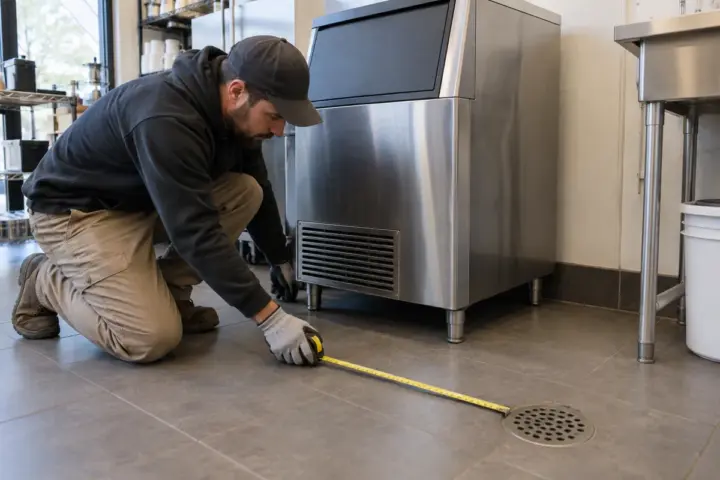
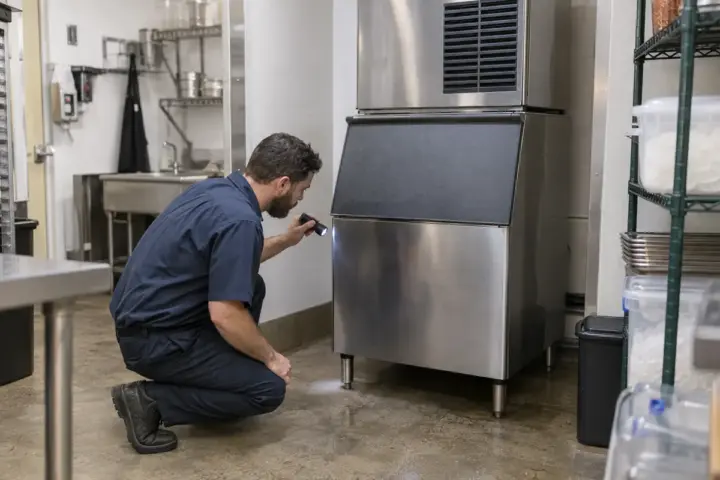
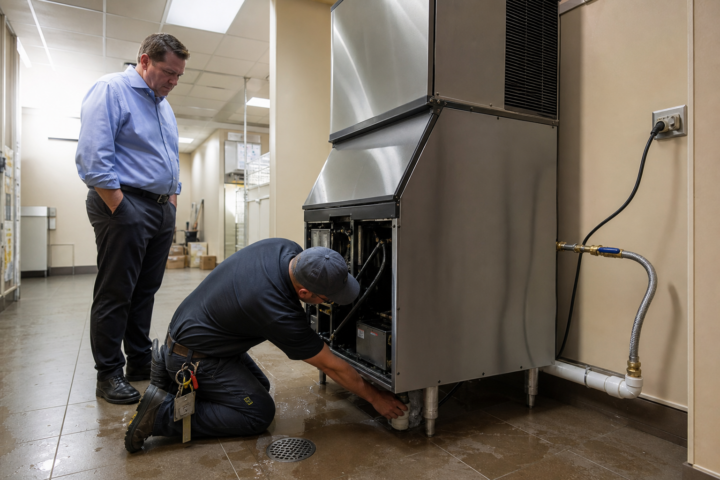
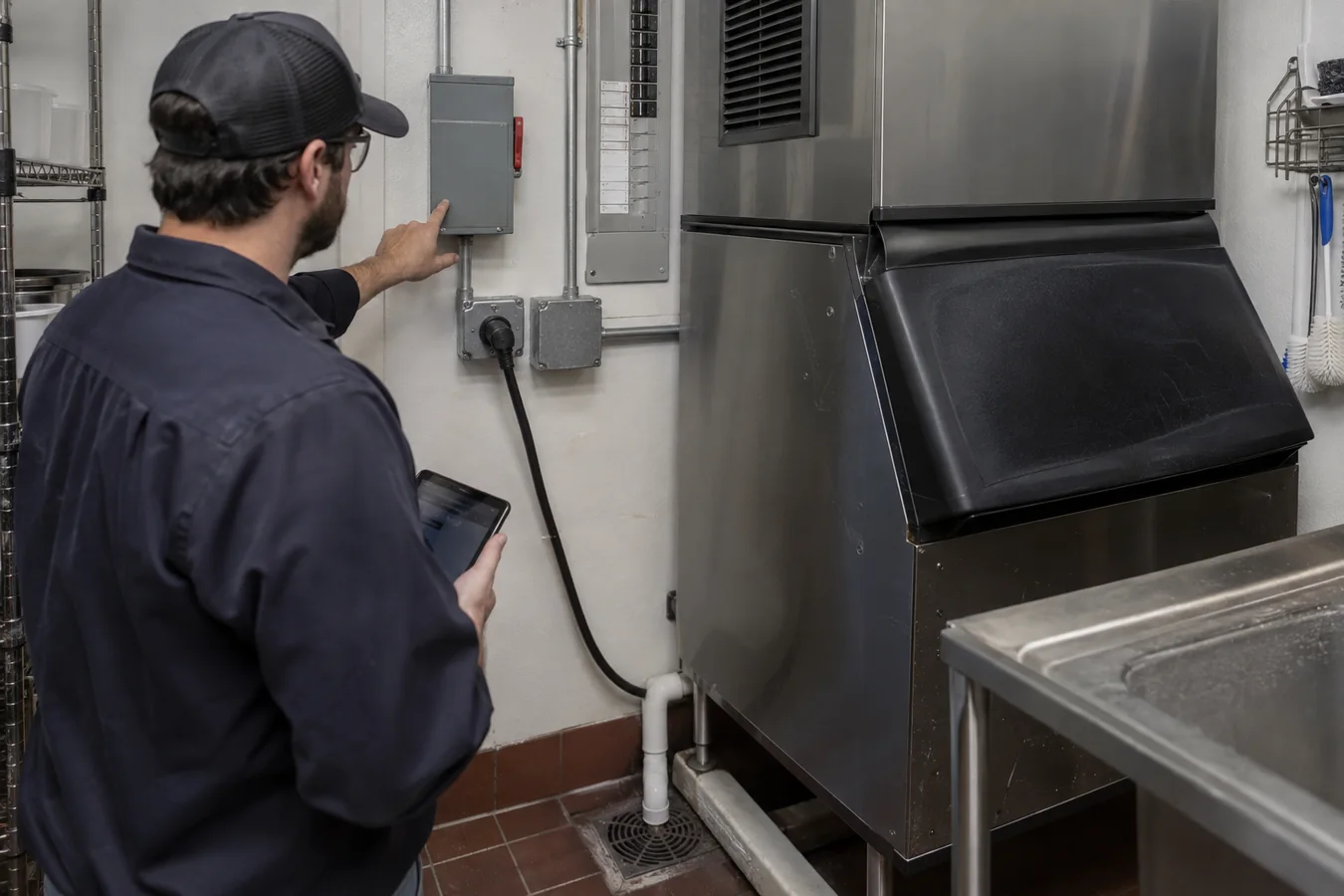
The disconnect or receptacle must remain accessible without conflicting with water connections, drains or service panels. Check the tubing and drain route before finalizing the outlet location. The machine also needs the ventilation and clearance specified for its condenser arrangement. Moving one utility late can create avoidable labor or an awkward service area.
Existing circuits should be verified rather than assumed available. A label in a panel does not prove capacity, condition or the correct connection at the equipment. Review installation allowances with the ice machine installation cost guide.
Put inspections and startup in the schedule
Local requirements and the site’s own safety procedures may affect permits, disconnects, protection and inspection. Coordinate the electrician, plumber, equipment installer and facility representative before delivery. At startup, confirm that the machine operates without tripping protection, overheating the space or interfering with nearby equipment.
Record panel, circuit and disconnect information in the facility file after acceptance. Future service work is faster and safer when the technician can identify the correct isolation point and original equipment requirements. If the machine is replaced later, compare the new load rather than assuming the existing circuit remains suitable.
Use the commercial ice machine FAQs and capacity guidance to keep electrical work tied to the actual machine selection. The safe sequence is simple: select the configuration, verify current requirements, prepare the site and document the startup. Guessing from a previous installation reverses that sequence.
Ask the supplier to confirm any electrical option before purchase and keep that confirmation with the approved model list. Small suffixes or condenser choices can change the required preparation, so the ordered equipment and field documents must describe the same configuration.