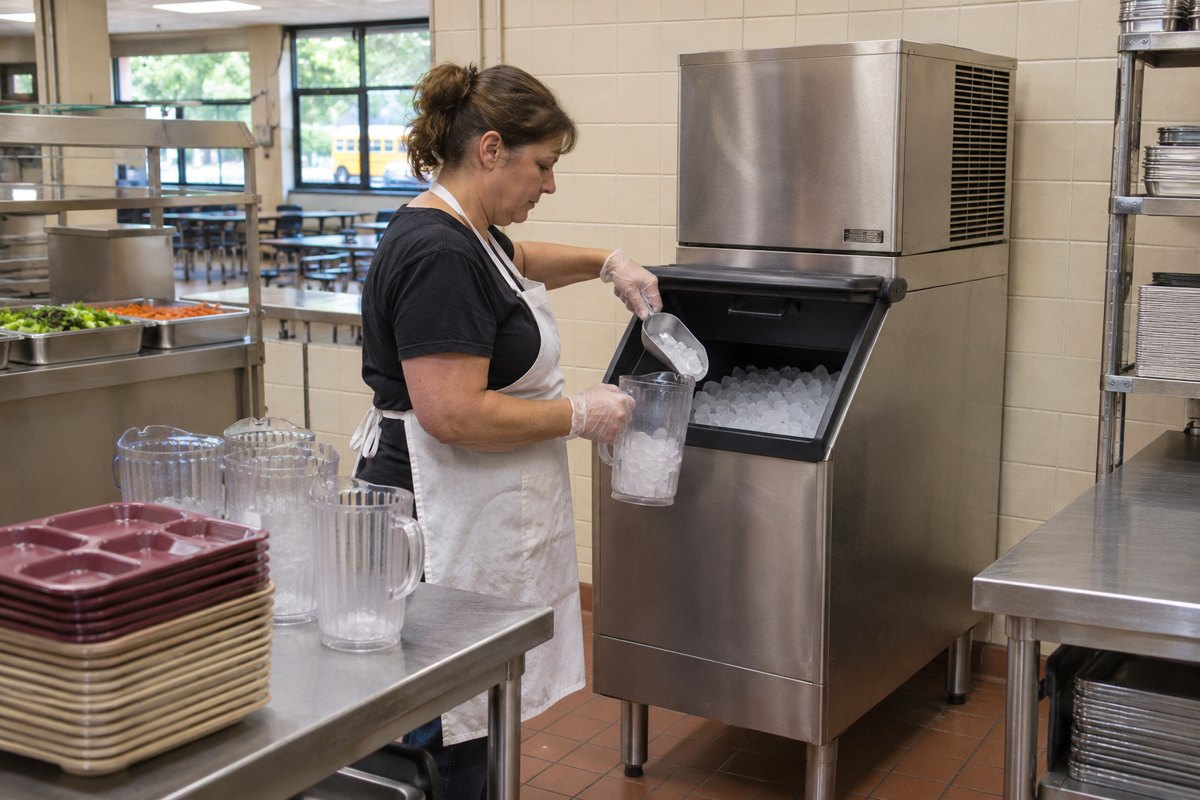
School cafeteria ice machines need to keep up when several serving lines open together. The right machine gives staff enough usable ice for lunch without paying for capacity the kitchen rarely needs. Start your school cafeteria ice machine prices comparison with meal counts, the actual drinks served and the busiest service period.
A daily production rating doesn’t tell you how much ice will be ready at 11:30 a.m. A kitchen can have enough production over 24 hours and still empty its bin during the first lunch wave. Compare the machine and storage bin as a pair, using the same demand assumptions for every supplier. See current restaurant ice machine prices.
Count the busiest service, then check recovery
List the ice used for beverage cups, pitchers, kitchen tasks and approved special events separately. Don’t count every enrolled student as an iced-drink customer if most lunches include cartons or bottled drinks. Ask kitchen staff to record a representative busy day and identify any extra demand from staff rooms or after-school activities.
Work backward from the largest withdrawal before the machine can recover. For example, filling pitchers before lunch draws down storage before students arrive. Our ice bin sizing article explains that distinction. Leave the supplier to calculate a suitable production and storage combination using measured demand and stated assumptions, rather than adding an arbitrary oversized machine.
Choose equipment staff can actually use and clean
A commercial ice machine can suit a small service area, while a modular head and separate bin may better support several lunch periods. Check scoop access, lid clearance and the route from the bin to the serving line. The smallest footprint isn’t helpful if staff must carry heavy containers through a crowded aisle.
Ice shape should suit the drinks and dispensing method. The ice type guide covers the practical differences. Avoid choosing a machine solely because its ice looks appealing; cleaning access, compatible filtration and local service support also belong in the decision. Follow the manufacturer’s cleaning and sanitizing instructions and the facility’s food-safety procedures.
Compare the complete installed package
Have each supplier identify the machine, bin, filter assembly, installation work and any accessories by model or written specification. Confirm water, drain, electrical and ventilation requirements against the proposed kitchen position. The installation checklist helps you prepare that discussion before delivery.
Ask what happens during school closures: who handles shutdown, restart and scheduled service, and which charges continue? Check warranty exclusions and the availability of an authorized local technician. A low equipment price can become an awkward purchase if routine access or maintenance was left out of the scope.
Send the same lunch-service assumptions to each supplier, then compare school ice machine prices for equipment that fits the kitchen’s real workload.