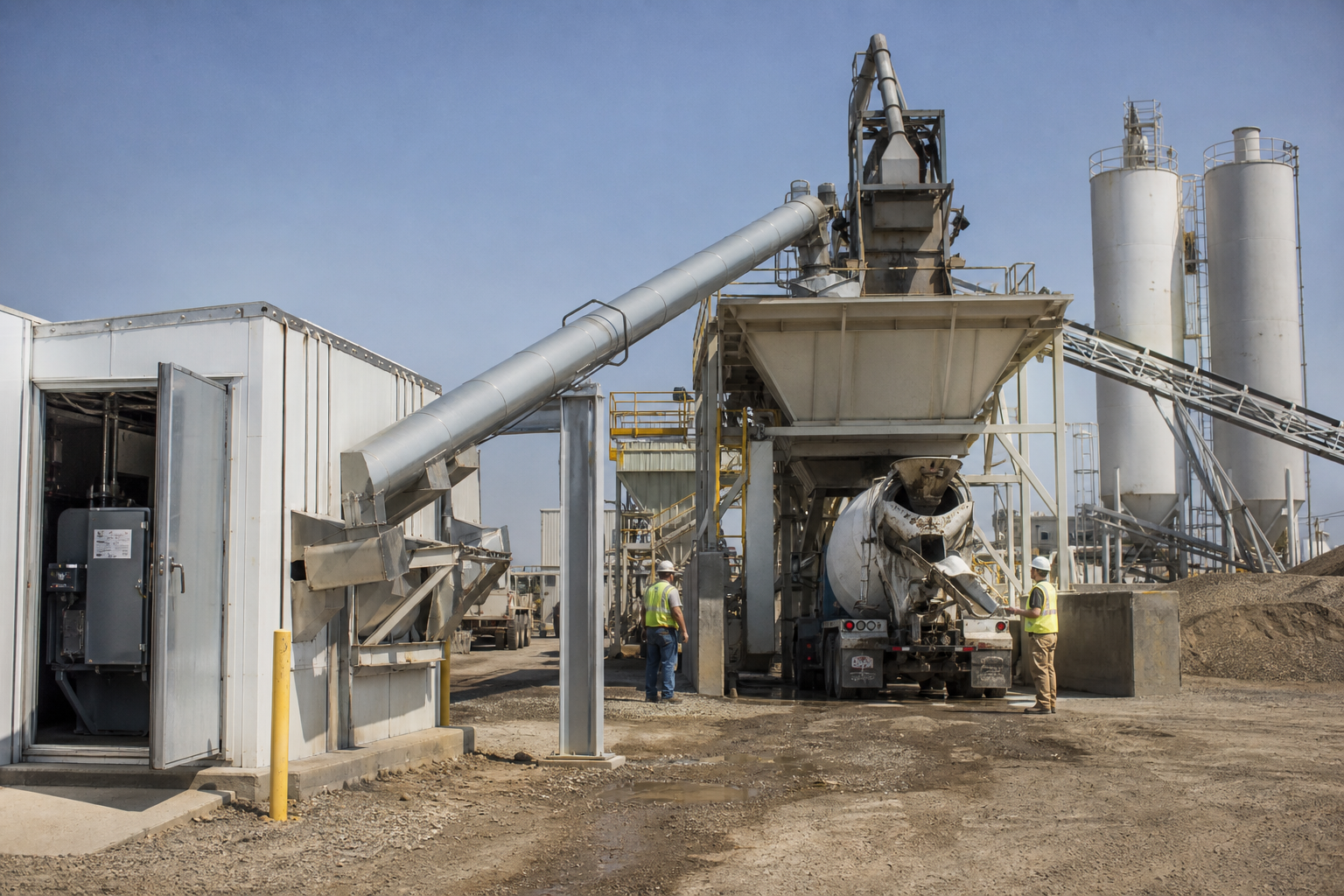
Concrete cooling is one of the clearest examples of ice functioning as an engineered ingredient. In hot-weather production or temperature-controlled placements, measured ice can replace part of the batch water and absorb heat as it melts. The ice plant, storage and dosing system therefore have to coordinate with the batch controls rather than operate as a separate utility.
An industrial ice machine for concrete cooling should be selected from the mix design, target discharge temperature, material temperatures and peak batch schedule. Freezer Supply’s industrial ice systems include high-output configurations that can be evaluated for concrete and other continuous-production applications.
Begin with the concrete temperature plan
The producer and project team should define the required concrete temperature and how it will be verified. Estimate heat contributed by cementitious materials, aggregate and water under design-day conditions. Then calculate how much batch water may be replaced by ice while maintaining the approved water content.
This is a process-engineering calculation, not a general rule of thumb. Aggregate moisture, actual material temperatures, haul time and mixing energy all affect the result. The ice requirement should be reviewed with the concrete technologist and incorporated into the approved batch procedure.
Select an ice form that doses consistently
Flake or finely broken ice is often practical because it can be conveyed, weighed and melted during mixing more predictably than large hard pieces. The chosen form must move through storage and delivery equipment without bridging or creating erratic batches.
Evaluate bulk density, ice temperature, residual water, conveyor behavior and weigh accuracy. A machine’s daily output is only one specification; the system must deliver the required batch quantity during the plant’s shortest cycle.

A representative northeast Kansas ready-mix producer
Consider an anonymous ready-mix producer serving projects across Jefferson, Shawnee and Douglas counties. This is a representative planning scenario, not a named Freezer Supply customer installation. The company expected its largest ice demand during summer placements with early-morning batch peaks and long delivery windows.
The first concept used a single large ice maker sized from total daily tonnage. When the producer compared the batch schedule to ice recovery, it found the machine could meet the daily total but not refill storage quickly enough between the heaviest groups of trucks. The plant evaluated modular production feeding insulated storage with a weighed screw-conveyor delivery path to the batch hopper.
The team also planned a limited-production response for maintenance days instead of claiming full redundancy. Extra storage covered a defined number of early batches, while staged equipment allowed some production to continue. Buyers seeking a Topeka ice machine company or comparing commercial ice machines in Lawrence should bring the same batch-by-batch demand profile to the conversation. Freezer Supply also maintains broader Kansas ice machine coverage.
Convert batch demand into production and storage
List every anticipated batch during the peak hour, the pounds of ice required in each and the time available to rebuild inventory. Then account for production at the equipment’s real condenser and incoming-water conditions. Hot mechanical spaces and warm source water can reduce available output at the same time concrete demand is highest.
Storage should bridge the planned batch sequence without holding excessive old ice. Insulation, agitation and discharge geometry affect compaction and bridging. Provide a way to empty and inspect the storage system safely.
Engineer delivery and batch controls together
Common delivery methods include screw conveyors, gravity chutes and weigh hoppers. The route should be short, insulated and protected from meltwater. Controls need to verify the amount of ice added and coordinate it with the batch-water adjustment so total water remains consistent with the approved mix procedure.
Determine how the system handles a conveyor trip, scale fault or incomplete dose. Operators need a clear stop, alarm and recovery procedure. Guarding, access platforms and lockout provisions should be reviewed with the plant’s safety team.
Plan utilities, heat rejection and winter operation
Confirm electrical service, water flow, treatment, drainage, condenser placement and the operating environment. Remote heat rejection may protect output in summer but adds refrigerant piping and service considerations. Outdoor components also need a freeze-protection and seasonal shutdown plan.
The system may sit idle for part of the year. Specify layup, cleaning and restart procedures so stored water, scale or corrosion does not create a spring startup problem. Service access should not conflict with aggregate traffic or ready-mix truck movement.
Prepare a useful concrete-cooling equipment request
Provide target concrete temperature, design-day material temperatures, approved ice allowance, pounds per batch, peak batches per hour, operating season, storage reserve, dosing accuracy, conveyor distance, available utilities and required reduced-production capability. The industrial ice machine pricing form is most useful when those process inputs are already defined.
Frequently asked questions
Why is ice used in concrete production?
Ice can replace part of the batch water and absorb heat as it melts, helping a producer meet a defined concrete temperature plan. The quantity must follow the approved mix and project procedure.
What type of ice is used for concrete cooling?
Flake or finely broken ice is often chosen for conveying, weighing and melt performance. The final selection depends on the batching system and required dose accuracy.
Should a concrete ice plant be sized by tons per day?
Daily tonnage is not enough. Size from pounds per batch, peak batches per hour, storage reserve and production at expected summer site conditions.
Can an ice machine be added without changing batch controls?
Usually the controls and operating procedure must account for ice weight, batch-water adjustment, incomplete dosing and temperature verification. Coordinate the design with the plant’s concrete and controls specialists.