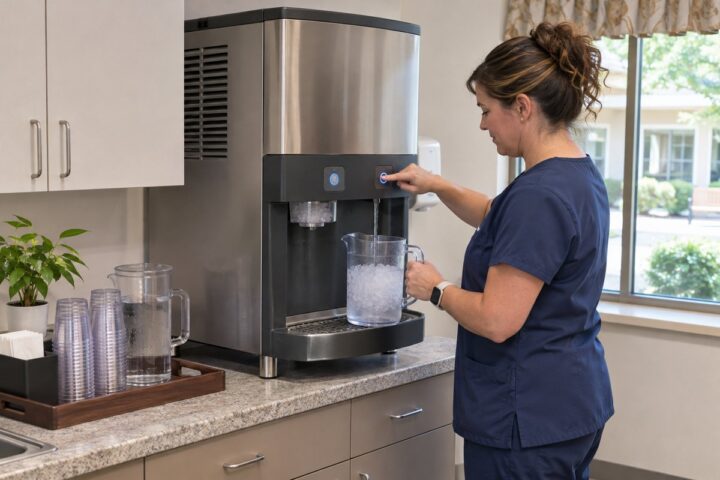
Nugget and cube ice feel different in a drink, but texture is only the first decision. A nugget vs cube ice machine comparison should connect the ice form with customer use, production rate, storage, dispensing and cleaning. When requesting commercial ice machine prices, describe the application before naming a preferred style.
Start with what the ice must do
Cube ice is common for beverage service where slower melting and a familiar presentation matter. Nugget ice is chewable and can be attractive for certain beverage, healthcare and hospitality uses. Neither description sizes a machine. Count the drinks, cups, peak service periods and any non-beverage demand that draws from the same supply.
Use the ice machine type overview and the capacity guide to prepare consistent production and storage requirements.
Compare the machine, bin and dispenser together
Confirm that the selected ice works with the intended bin, beverage dispenser or hotel dispenser. Ask how the ice moves through the system and how peak demand affects stored supply. A compact machine may fit the available footprint but still lack recovery or storage for a busy period.
Installation should be checked separately for each proposed model. Water, drain, electrical, ventilation and service-clearance needs can vary. Review these questions against the commercial ice machine buyer’s guide instead of assuming two machines with similar capacity are interchangeable.
Plan cleaning and water treatment before purchase
Ice machines need regular cleaning and sanitation, and water conditions influence filter and scale-control choices. Ask who performs routine care, which parts require access and what documentation the service company provides. The water filter guide can help frame a site-specific discussion.
Ask the team that will use the machine to review the choice. Beverage staff may care about cup fill and dispenser behavior, while facilities staff will notice cleaning access, noise, heat and service clearance. A short operational review can expose a mismatch that is invisible in a production-capacity table.
Finally, compare complete installed and supported prices through the commercial equipment overview. The right ice is the form that meets the operation’s actual use while the machine, storage, utilities and maintenance plan remain practical. A sample cup may start the conversation; the operating plan should finish it.
Document the final assumptions for cups or pounds used during the peak period, required reserve in the bin and who will monitor cleaning. Those details give the supplier a better basis for the recommendation and give the operator a clear way to judge performance after installation.