
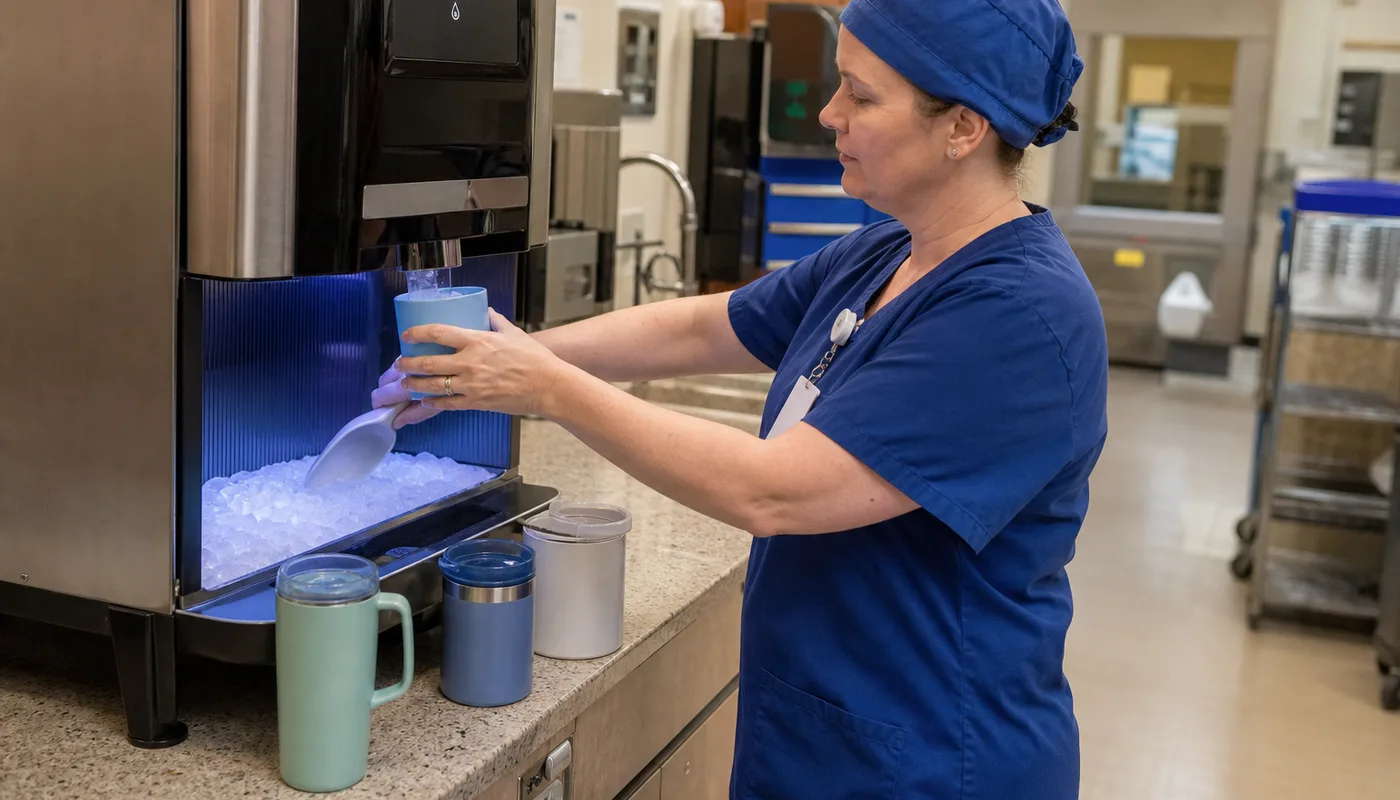
Stadium and arena ice demand is concentrated. Concessions, suites and clubs all load up before gates open and draw again at intermission or halftime. A system can have impressive daily production and still fail if storage and distribution cannot deliver ice where it is needed in a short window.
Compare high-output industrial ice systems with distributed commercial machines by venue zone.
Design inventory and movement together
Calculate ice by concession stand, premium area and event period. Then decide whether it is produced locally or distributed from central storage. Carts, elevators, corridors and labor become part of the capacity calculation.
A 12,000-seat arena renovating concessions
The arena has several aging machines scattered around the concourse. Management considers one central plant to simplify maintenance, but the service elevator is already congested before events.
The final concept uses central bulk capacity for premium and back-of-house operations while retaining distributed machines in two high-volume zones. Maintenance becomes more consistent without making every stand dependent on one route.
Calculate the event load
Use cups, stands, suites, event type and simultaneous service periods.
Stage before the rush
Storage must cover opening and intermission even if production is continuous.
Map distribution labor
Travel time, carts, elevators and sanitary handling affect the operating cost.
Build practical redundancy
One failed machine or blocked route should not stop every zone.
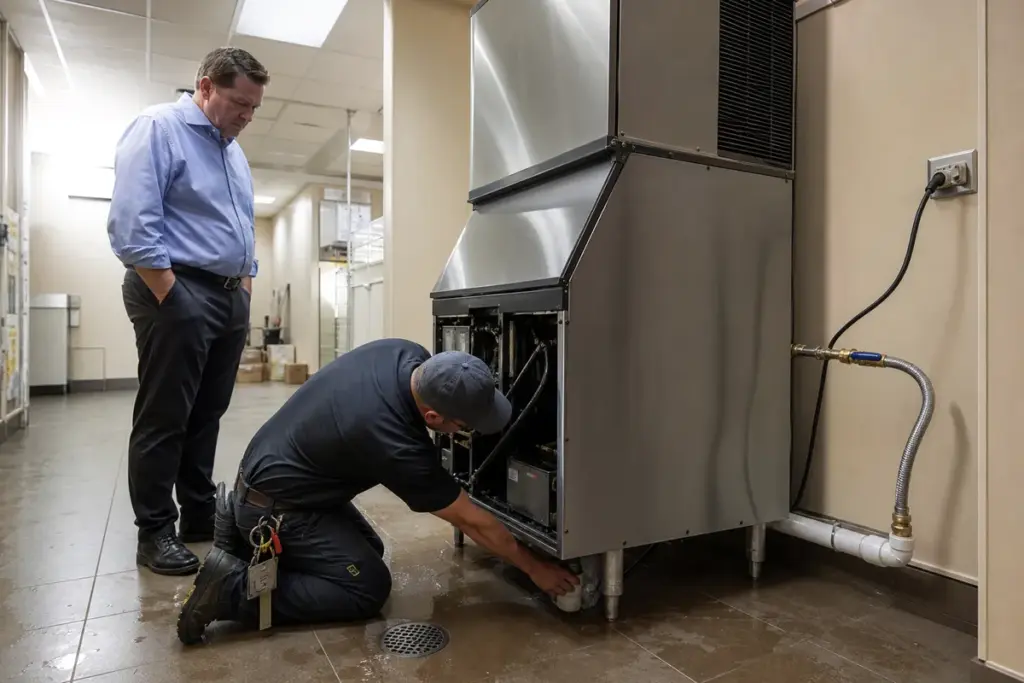
Coordinate utilities and heat rejection
Large systems require serious water, power, drainage, ventilation and structural planning.
Questions worth asking before you choose
- How many pounds are needed before gates open?
- Which zones peak at the same time?
- Can staff move ice safely and quickly?
- What continues if the central plant is offline?
- Where can condenser heat be rejected?
What a useful proposal should make clear
A useful ice-machine proposal identifies the application, required ice type, peak and daily production, storage, ambient and incoming-water conditions, condenser configuration, water treatment, utilities, installation scope, sanitation plan, warranty, service coverage, redundancy and every optional charge.
A practical next step
Provide event and concession counts through the high-capacity ice system request.
Frequently asked questions
Should a stadium use central or distributed ice machines?
Many venues use a hybrid based on capacity, routes, service access and redundancy.
How is arena ice capacity calculated?
Start with event-specific peak demand by zone, then add storage, recovery and backup.
Can existing machines be retained during an upgrade?
Sometimes, if condition, capacity, sanitation and serviceability support the plan.