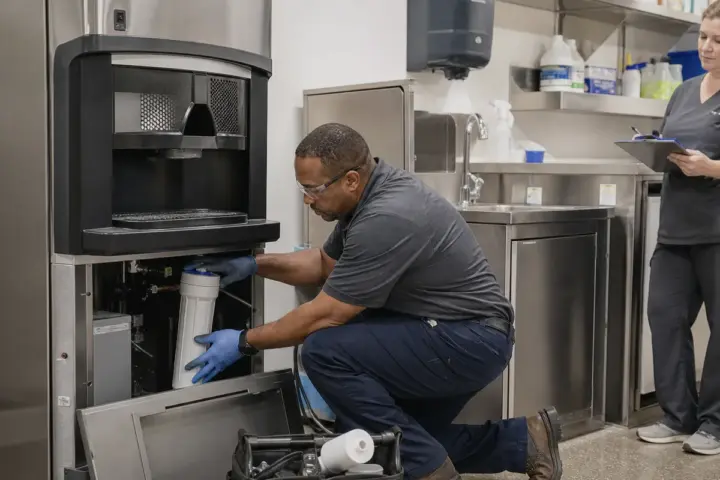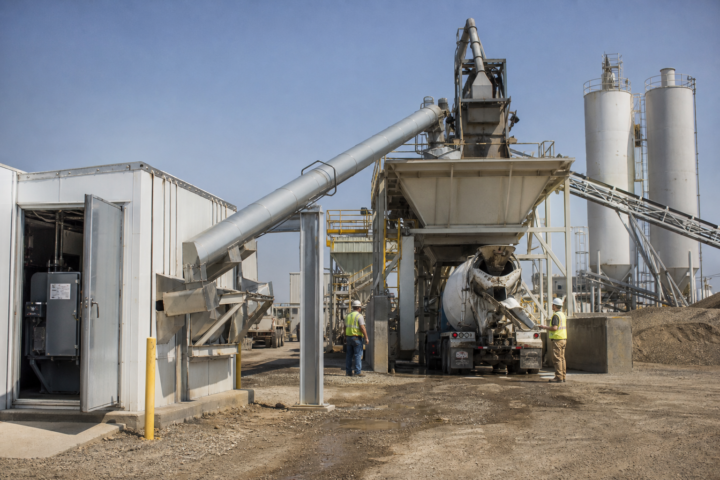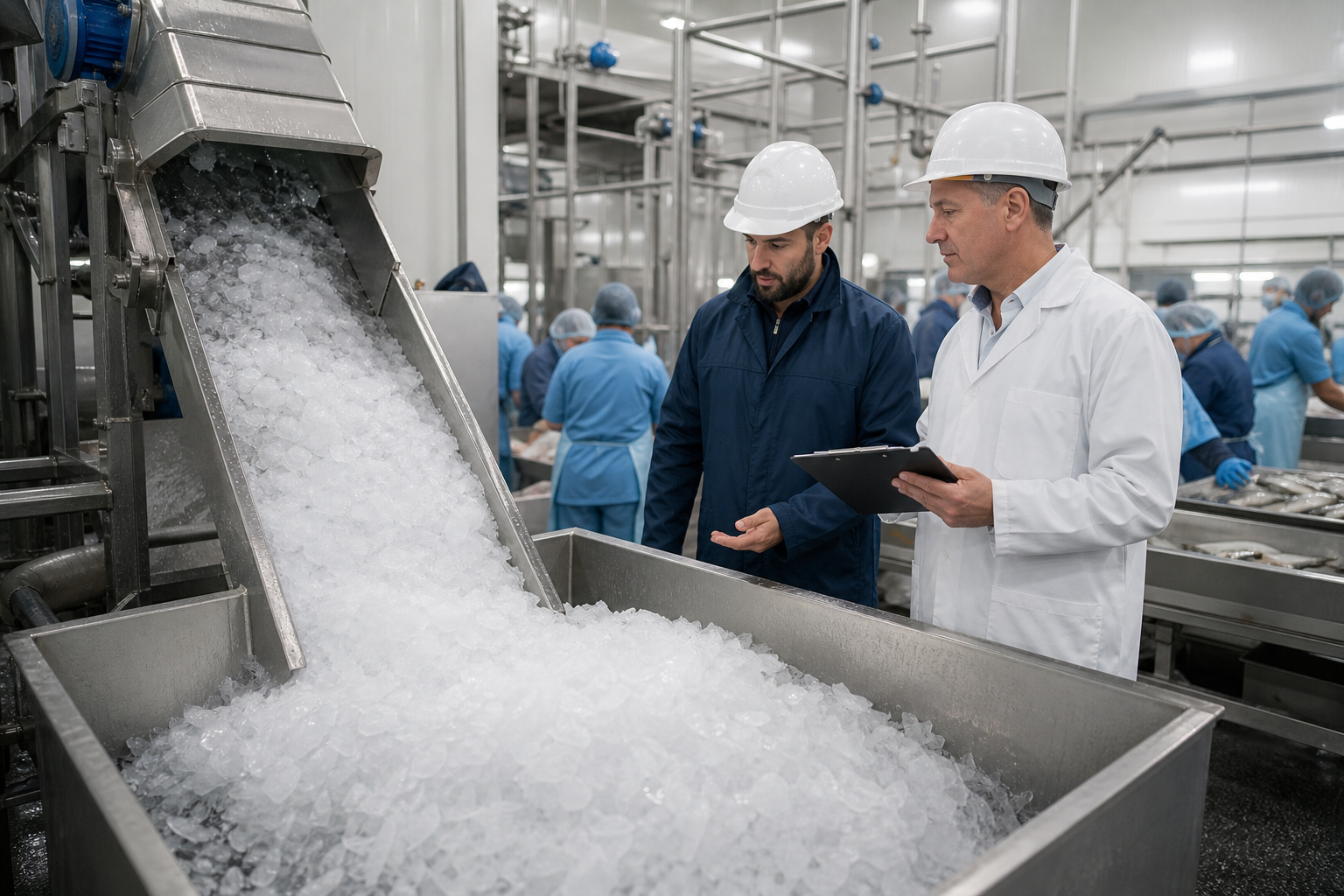
An industrial ice machine for food processing is part of the production system, not a larger version of a restaurant machine. Ice form, temperature, dosing, storage, delivery, sanitation and redundancy all affect whether the system actually protects product and supports line speed.
Planning should start at the use point. Define what the ice must do, how many pounds are required per batch or hour, and how it will move from the evaporator to the product without creating a sanitation or labor problem. Freezer Supply’s industrial ice machine overview covers flake, tube, block and large-scale production systems used in food processing and other high-volume operations. See current industrial ice machine prices.
Define the cooling job
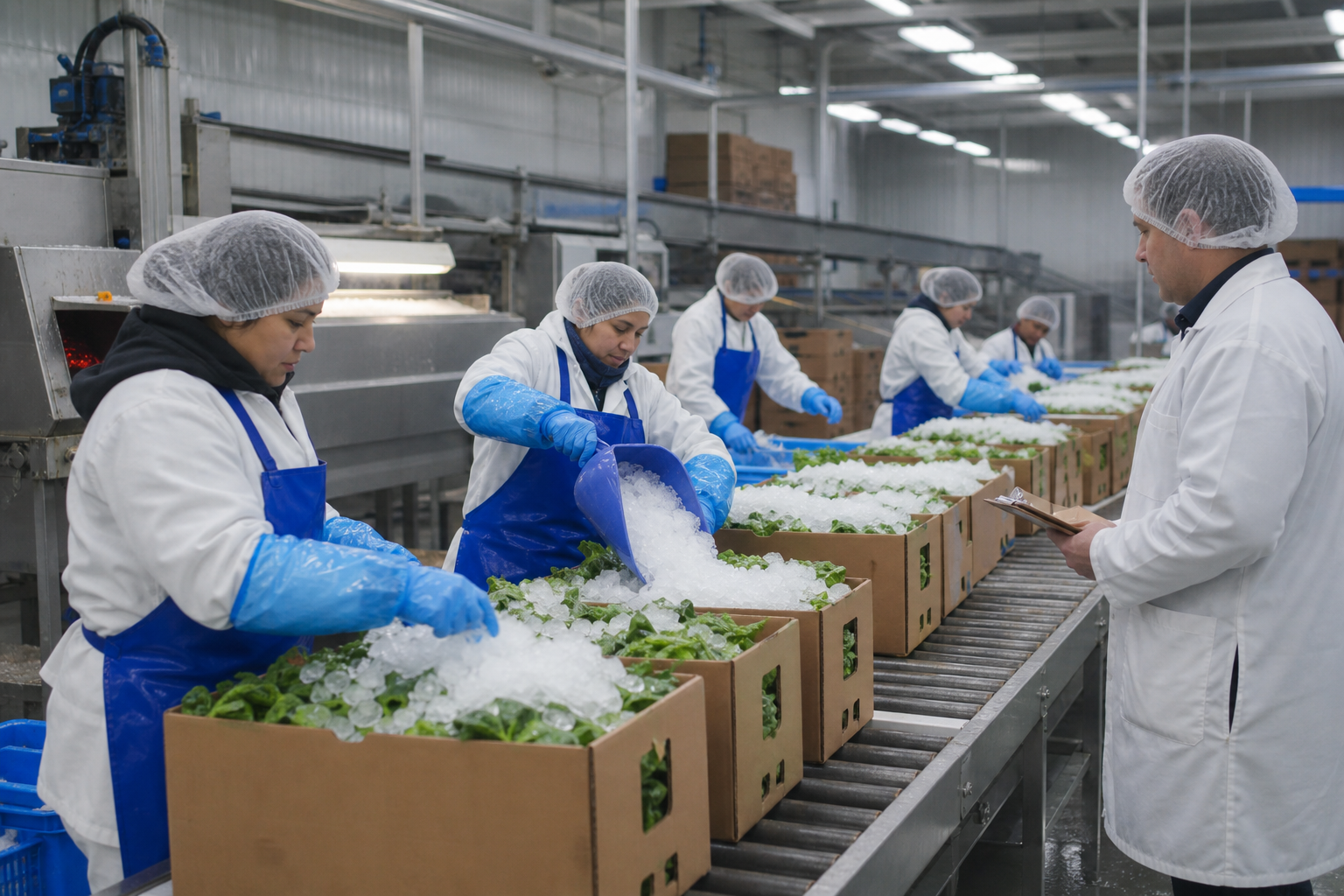
Ice may be used to hold seafood or produce cold, remove heat during mixing, control dough temperature, support poultry processing or protect product during packing and transport. Each use has a different contact pattern and temperature target. See current industrial ice machine prices.
Write down the inlet product temperature, target temperature, batch size, line rate, exposure time and amount of external heat entering the process. A production figure in tons per day is meaningful only when it is connected to that process load.
Select ice form around heat transfer and handling
Flake ice is common in processing because thin pieces provide broad product contact and are easy to distribute. Tube and hard ice can be useful where durability, storage or transport matters. Block systems serve specialized large-scale or distribution needs.
Ice form also changes bulk density, storage volume, conveyor behavior and dosing. A bin sized by weight may occupy a different footprint for another ice form. Test the proposed ice in the real process whenever the application is unusual or the cost of a mistake is high.
Convert daily demand into an hourly production profile
A plant may use most of its ice in one shift or in short batch windows. Calculate the hourly or batch requirement, then account for storage and refill time. If the process draws 4,000 pounds in two hours, a nominal daily rating by itself will not show whether the bin and delivery system can sustain that event.
Use production ratings adjusted for the actual water and ambient conditions. Incoming water may be warmer seasonally, and heat near the equipment can reduce output. Freezer Supply’s guide to sizing industrial ice machines provides a broader capacity framework.
Engineer storage and delivery as one system
Ice that has been produced but cannot be delivered consistently is not useful capacity. Storage may use bins, silos, rake systems or insulated carts. Delivery may involve gravity, augers, screw conveyors, pneumatic systems or manual handling.
Evaluate bridging, compaction, meltwater, cleanout access and the effect of each conveyor on ice quality. Limit unnecessary transfers. Every chute, gate and conveyor adds maintenance and a sanitation surface.
Design for food safety and sanitation
Ice that contacts food should be treated as a food ingredient. The water supply, food-zone components, storage and delivery path need a documented cleaning and sanitation program. Materials and finishes should fit the plant’s washdown method and chemical program.
Place access doors, drains and removable components where employees can use them safely. Avoid dead legs and hidden areas that cannot be inspected. Coordinate the equipment design with the facility’s food-safety plan and applicable regulatory requirements rather than assuming the machine supplier’s standard arrangement covers the complete process.
Plan utilities and heat rejection
Large systems can require significant electrical capacity, water flow, drainage and condenser infrastructure. Confirm voltage, phase, demand, water pressure, water treatment, drain capacity and ambient design temperature. Decide where condenser heat will go and whether the condenser can be serviced without interrupting production.
Water chemistry deserves specific analysis. Scale can reduce heat transfer and production, while unsuitable treatment can affect materials or ice quality. Filtration and treatment should be engineered around the water and the manufacturer’s requirements.
Build a redundancy and maintenance strategy
If the line stops when the ice system stops, redundancy is a production requirement. Two staged machines may allow maintenance on one unit while the other carries part of the load. Redundant pumps, drives or condensers may also be appropriate depending on the failure consequence.
Document spare parts, service access, cleaning windows and emergency ice supply before startup. Review manufacturer support for the installed region. Freezer Supply offers pages for systems from Manitowoc, Hoshizaki, Scotsman, Ice-O-Matic and Follett; model availability and suitability must be confirmed for the specific process.
Prepare a useful request for pricing
Include the product and process, required ice form, pounds per batch or hour, operating shifts, storage target, delivery distance, sanitation environment, incoming-water conditions, electrical service, condenser location and redundancy expectation. Use the industrial ice machine pricing form once these inputs are available.
Frequently asked questions
Why is flake ice common in food processing?
Its thin shape creates broad product contact, distributes easily and can remove heat efficiently. The best form still depends on the process, delivery method and sanitation plan.
Should an industrial system be sized in tons per day?
Tons per day is useful, but it should be supported by hourly or batch demand, storage capacity and production at expected site conditions.
When is redundancy justified?
Redundancy is justified when lost ice production would stop a line, compromise product or create costs greater than the added equipment and maintenance.
Can a standard storage bin feed an automated production line?
Sometimes, but automated delivery often requires purpose-designed agitation, discharge and controls. Bridging, compaction, meltwater and sanitation access must be tested for the chosen ice form.