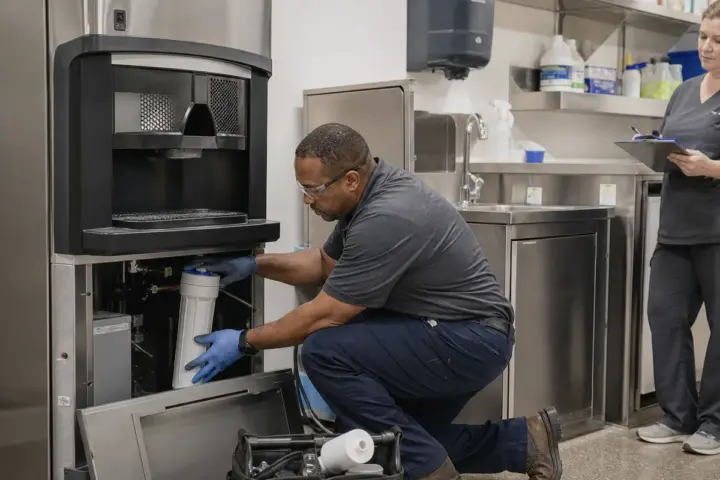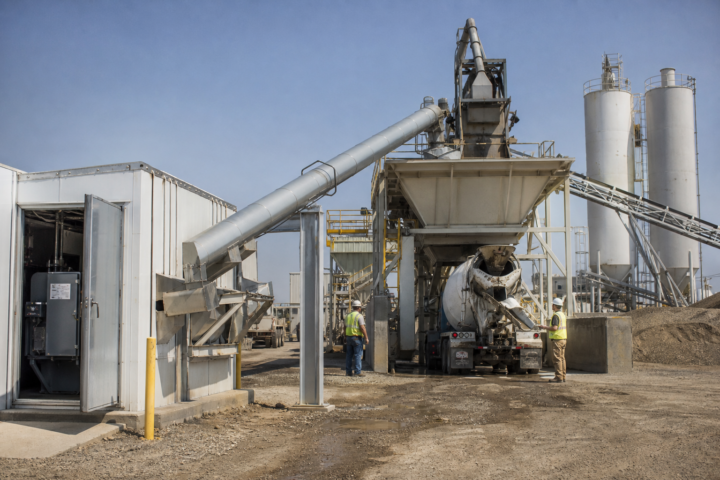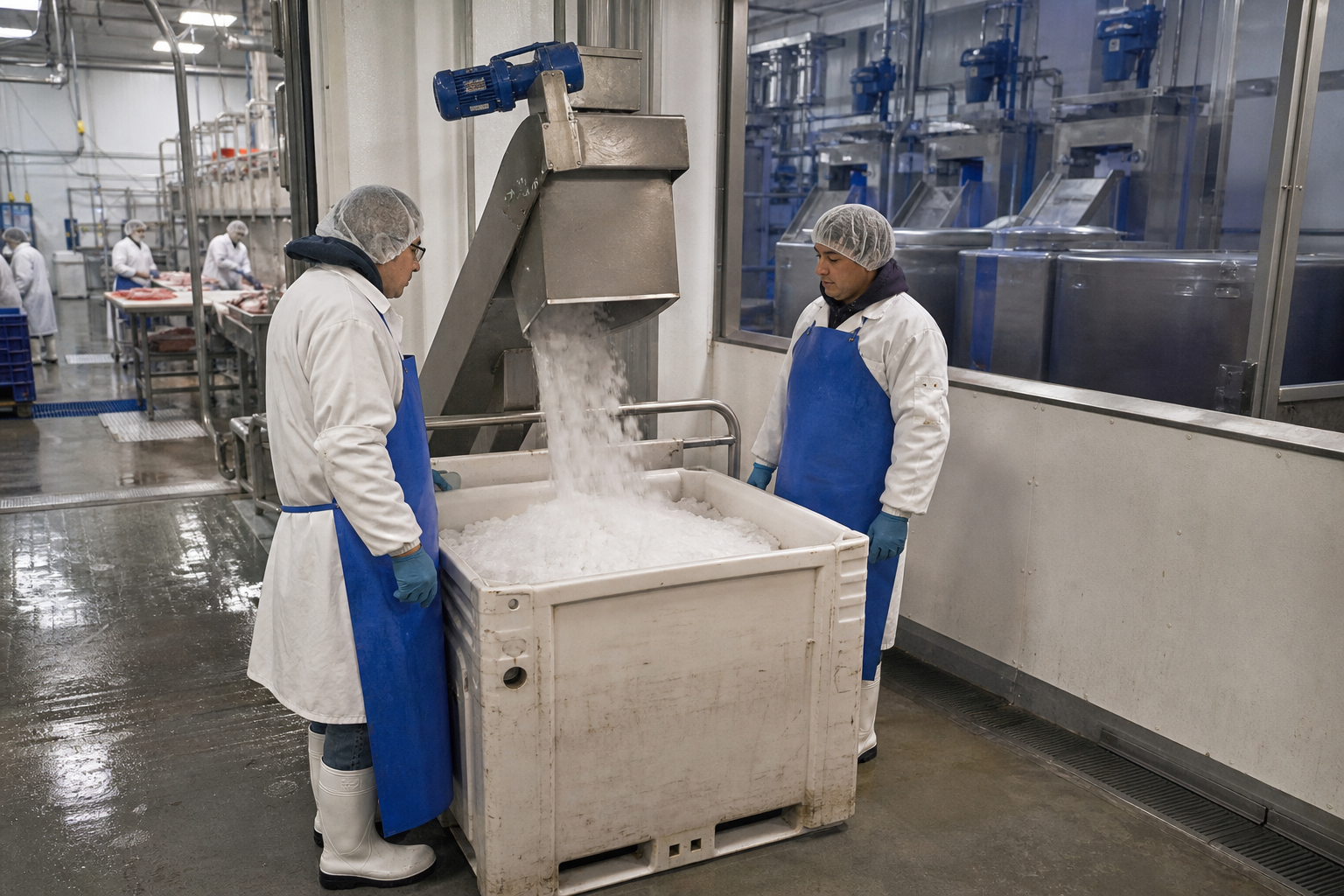
In meat processing, ice is a controlled production input. It may remove heat during blending, help manage product temperature, support handling or protect quality between process steps. The ice system has to deliver the required pounds at the right time and in a form that distributes consistently through the process.
That is why an industrial ice machine for meat processing should be specified from hourly line demand, not a broad tons-per-day target. The evaporator, storage, delivery equipment, controls and sanitation access all affect usable capacity. Freezer Supply’s industrial ice machine overview introduces flake, tube, block and other large-scale systems used in production facilities.
Define the exact process job
Document where ice enters the process, product weight per batch, starting and target temperatures, pounds of ice per batch, batches per hour and the acceptable variation. Separate continuous demand from short batch peaks. A plant that uses 6,000 pounds in a day may still need a much higher short-term delivery rate than that daily number suggests.
Review the calculation with production, quality, sanitation and maintenance. Production knows the real peaks; quality defines product limits; sanitation understands cleaning windows; maintenance knows what can be serviced without stopping adjacent equipment.
Why flake ice is common in meat processing
Flake ice has a large contact area and can spread through a batch without the concentrated impact of hard cubes. It is also compatible with many automated dosing and conveying arrangements. Those benefits do not make it universal. The process must tolerate the ice’s moisture, temperature, bulk density and behavior in storage.
Test how the proposed ice form feeds through gates, augers, weigh hoppers or carts. Bridging and compaction can make a full storage bin behave like unavailable capacity. If exact batch dosing matters, verify the weighing and control strategy as part of the system.
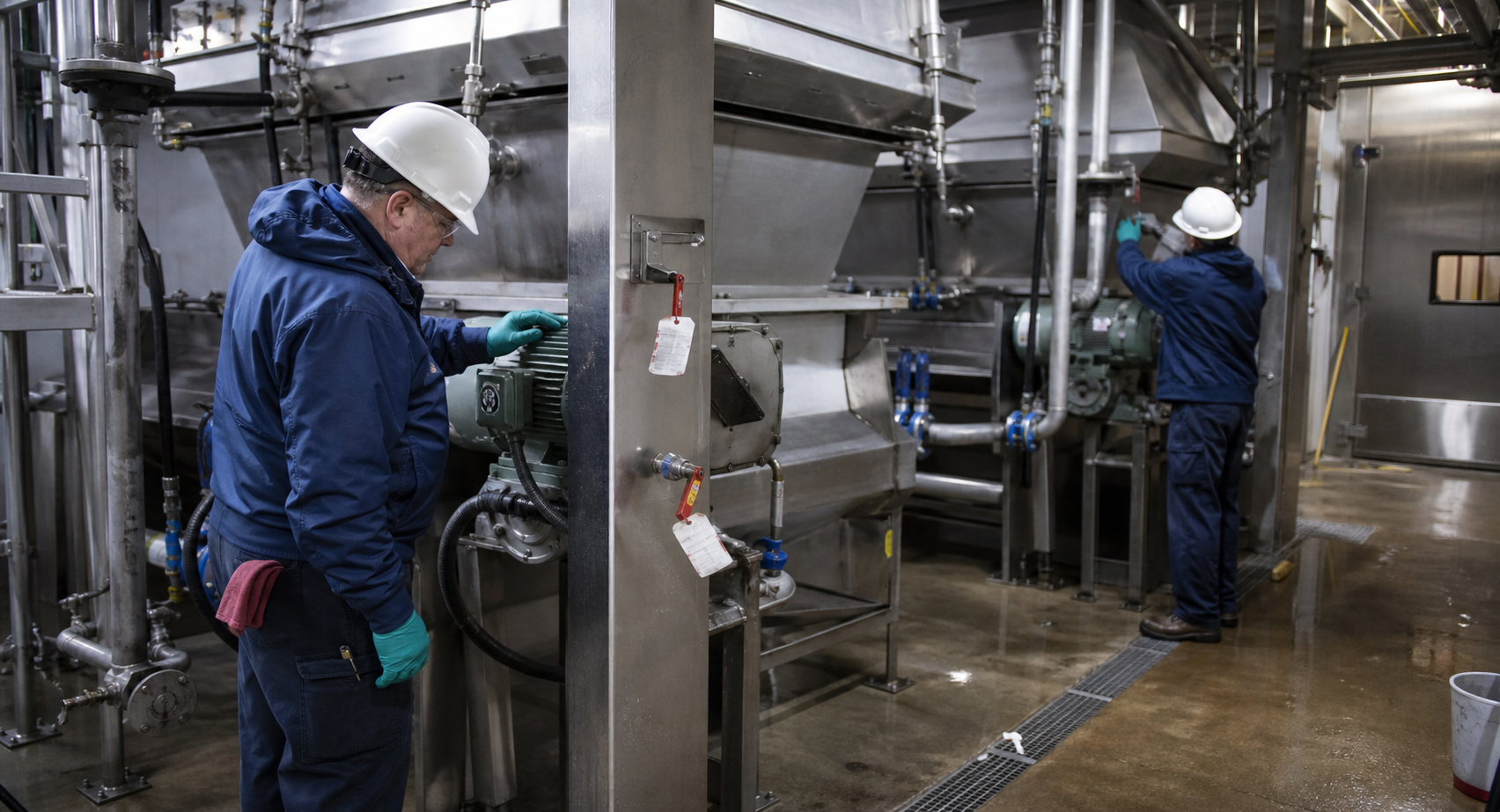
A representative Omaha meat processor
Consider an anonymous processor in the Omaha area running two production shifts. This representative scenario reflects common planning conditions and is not a named Freezer Supply customer installation. The plant’s original concept used one high-capacity flake machine and one large storage bin.
A closer review showed that most ice was drawn during several concentrated mixing windows. The sanitation shift also needed the bin and delivery equipment empty and accessible. A failure during the afternoon run would interrupt production before an emergency ice supply could arrive.
The plant evaluated two staged flake machines with split production capacity and a delivery arrangement that allowed one side to be cleaned or serviced while the other supplied limited output. It did not expect one machine to carry the full peak. Instead, the operating plan defined which products could continue at reduced rate and how storage would be rebuilt before the next shift.
That operational detail matters more than simply finding an Omaha ice machine company. Facilities outside the metro can also use Freezer Supply’s Nebraska ice machine coverage to begin a region-specific equipment comparison.
Design storage and delivery around sanitation
Bins, silos, rakes, augers and chutes need food-compatible materials and access for inspection. Minimize hidden ledges, dead spaces and unnecessary transfers. Every additional conveyor solves a handling problem but introduces wear parts and another surface to clean.
Coordinate the ice system with the plant’s sanitation method. Components must tolerate the approved chemicals and washdown conditions. Drains need enough capacity and correct placement so cleaning does not send water into motors, controls or adjacent production areas.
Adjust capacity for real conditions
Published output should be reviewed at the incoming-water and condenser conditions expected in the mechanical room. Seasonal water temperature, recirculated warm air and restricted condenser airflow can reduce output. The guide to sizing an industrial ice machine provides a framework for converting product demand into practical capacity.
Storage is not a substitute for production, and production is not a substitute for storage. The system needs enough stored ice to bridge batch peaks, plus enough production to rebuild that inventory during the available recovery window.
Decide what redundancy must accomplish
Redundancy should be tied to a written operating response. Determine which failures must be covered, how much production can continue and how long the facility can run at reduced capacity. Two machine heads sharing one critical conveyor may not provide the protection the team expects.
Include pumps, controls, storage discharge and condenser equipment in the failure review. Keep critical spares and establish service access before equipment placement is final. The existing food-processing ice system planning guide covers the broader utility, sanitation and delivery questions.
Prepare the equipment specification
Provide product and process details, pounds of ice per batch and hour, shifts, ice form, storage reserve, dosing tolerance, delivery distance, sanitation method, utility conditions, condenser location and required reduced-production capability. Use the industrial ice machine pricing form once the process team agrees on those inputs.
Frequently asked questions
Why is flake ice used in meat processing?
Its thin form provides broad contact and can distribute through product or a batch efficiently. The specific process and food-safety plan determine whether it is appropriate.
How is an industrial meat-processing ice machine sized?
Start with pounds per batch, batches per hour and peak shift demand. Then adjust production for expected site conditions and verify storage and delivery capacity.
Does installing two machines create full redundancy?
Not necessarily. Shared storage, conveyors, controls or condenser equipment can remain single points of failure. Define the reduced-production plan and test every critical path.
What should be included in the sanitation review?
Review food-zone materials, access doors, bin cleanout, augers, chutes, drains, chemical compatibility and the time required to empty and safely isolate the system.