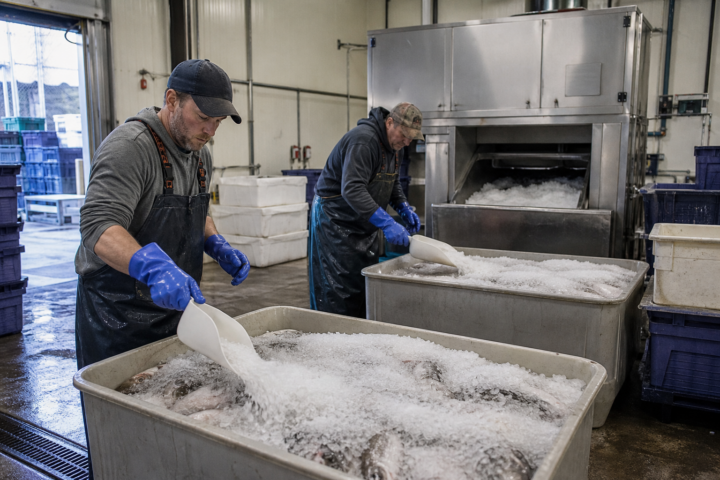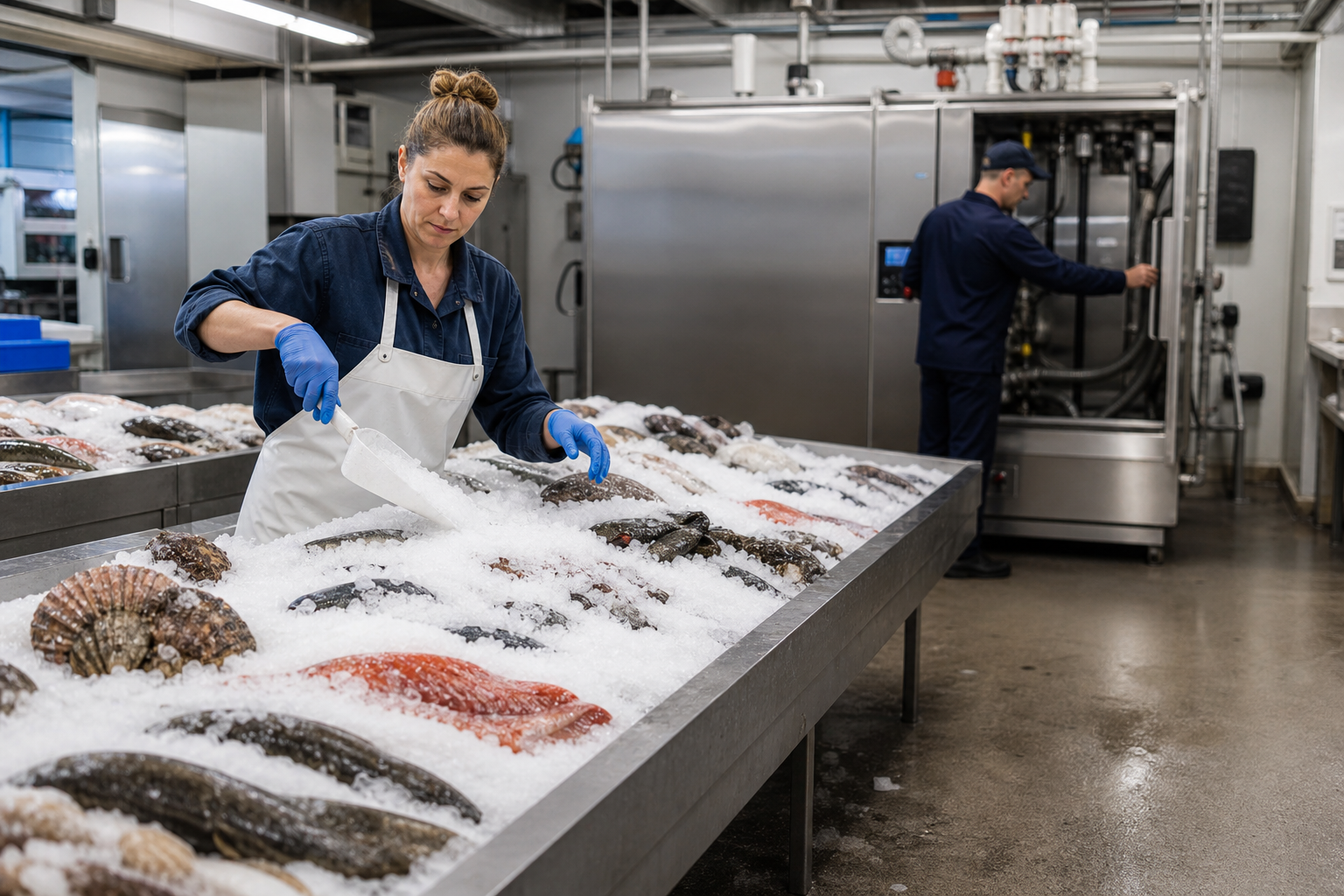
Seafood ice has a job beyond making a display look cold. It must surround product, drain predictably, replenish quickly and support handling from receiving through close. A machine that meets the average day but fails during a delivery surge is undersized in the way that matters.
Why flake ice fits seafood handling
Small, moldable flakes create broad contact and can be spread without damaging delicate product. The correct choice still depends on merchandising standards, local health requirements and whether ice touches food directly.
Build a demand worksheet
Measure display-bed volume, daily replenishment, receiving and packing needs, cleaning losses and the hottest operating conditions. Add realistic growth and recovery margin without buying so much excess capacity that the machine cycles poorly.
Plan storage, drainage and sanitation together
The bin, scoop storage, floor drain, water treatment and cleaning access are part of the system. Place equipment where staff can inspect and sanitize it. Follow the manufacturer’s cleaning schedule and applicable food-safety rules.
Decide how the market handles downtime
A high-volume market may use two smaller machines, documented bagged-ice support or a service plan with clear escalation. Compare industrial ice machines when central production serves multiple departments or locations.
Ready to compare practical options? Describe the display area, daily deliveries and peak pounds of ice so capacity can be compared responsibly.
Frequently asked questions
How much flake ice does a seafood market need?
Calculate each use separately and size for the peak operating day, water and air conditions, and recovery window.
Can the same ice serve displays and beverages?
Only if the ice type, equipment sanitation and local requirements support both uses.
Is air-cooled or water-cooled better?
It depends on room heat, ventilation, water cost, installation conditions and local restrictions.