Nursing home ice machines should give staff a dependable supply without creating difficult cleaning or handling routines. The right arrangement depends on where ice is used, who dispenses it and how the facility manages food and drink service. Compare nursing home ice machine prices for a defined workflow, rather than picking equipment from resident count alone.
Separate dining-room demand, staff use and any clinically directed uses before asking for recommendations. Equipment suitable for a staff breakroom isn’t automatically suitable for every resident-care application. Have the facility’s responsible clinical and infection-prevention staff review the intended use and specification. See current ice machine prices.
Put dispensing where the work happens
Walk the route staff follow when filling pitchers or serving drinks. Long trips to a central kitchen can make a single large machine inconvenient, but several smaller units add maintenance locations. Compare a central supply with distributed dispensing using the actual workload, building layout and staff responsibilities. Don’t assume more machines always mean better availability.
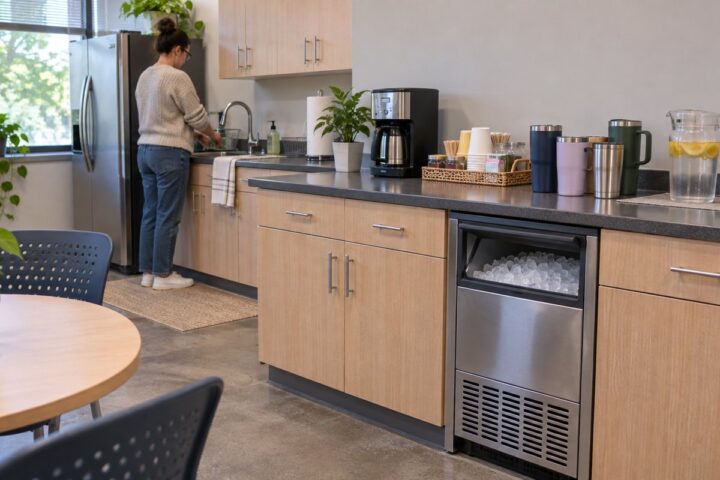
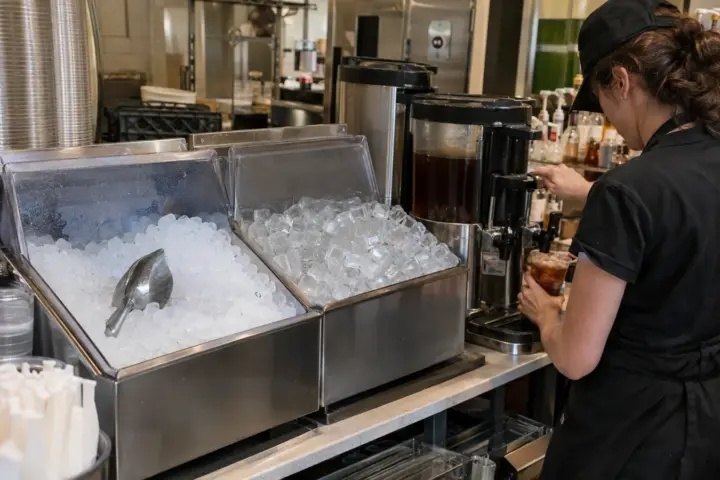
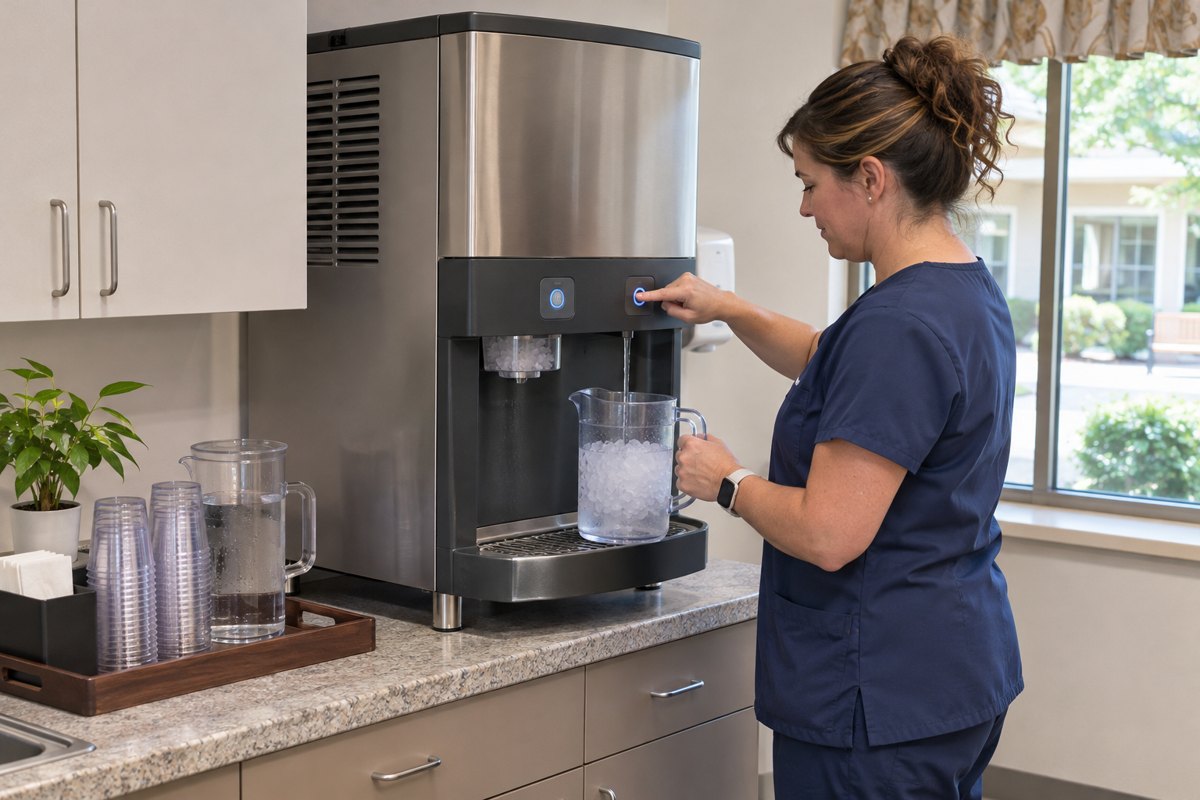
Think about who can reach the controls and where cups or containers sit during filling. A dispenser and an open storage bin create different handling routines. Ask suppliers to demonstrate the proposed equipment and explain the cleaning access. Our commercial ice machine guide describes the main equipment formats, while the ice type guide explains how cube, nugget and flake ice differ.
Plan around peaks and interruptions
Dining periods may draw a large amount of ice over a short time. Record that withdrawal separately from total daily demand, then ask each supplier to identify the machine’s production and usable storage assumptions. A published daily production rating doesn’t promise the same amount will be ready whenever staff need it.
Use the ice bin sizing article to understand production versus stored supply. Discuss what the facility will do during planned cleaning, a breakdown or service work. The practical answer may involve a different machine layout or an approved contingency supply, rather than an oversized machine with no maintenance plan.
Name the person responsible for each task
Specify who performs routine cleaning, scheduled sanitizing, filter changes and repair reporting. Follow the equipment instructions and facility procedures rather than adopting a universal cleaning interval from an article. Confirm which work the service provider includes and what staff must do between visits. Ask for accessible written instructions at handover.
Check water, drain, electrical and ventilation requirements before ordering. Our installation checklist is a useful preparation tool for the supplier visit. If different units are proposed for dining and staff areas, request itemized equipment and service details for each location so responsibility remains clear.
Send providers a short schedule of uses, locations and peak periods. Then compare nursing home ice machine prices for equipment that supports the facility’s approved routines and a realistic plan for ongoing care.